

How is a cochlear implant different?
How is a cochlear implant different?
Hearing aids work by making sounds louder. However, some people still struggle to hear, even with powerful hearing aids.
Cochlear implants work differently, and are designed to make sounds clearer1,2 for people with significant hearing loss.
For some people, using hearing aids with severe to profound hearing loss can be like listening to a loud, badly tuned radio. You may hear parts of what is being said and it may be loud enough, but the words are not clear.
Note: Wearing hearing aids first is a necessary step in the evaluation process for a cochlear implant.
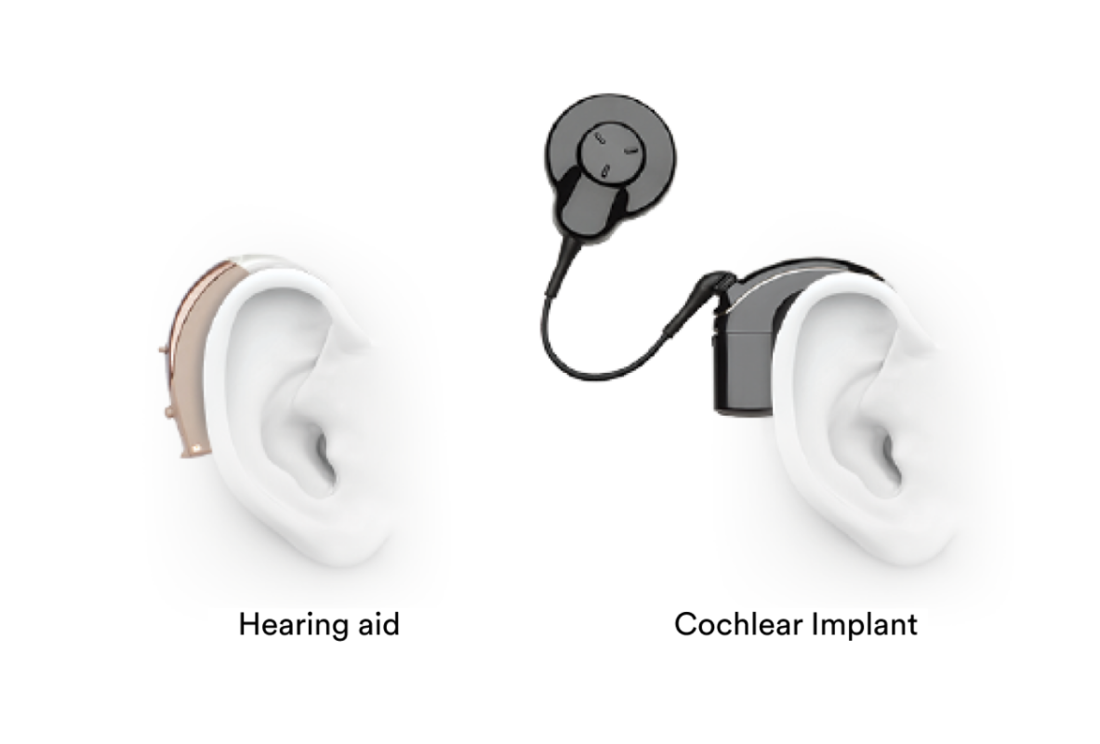
How is a cochlear implant different?
Hearing aids work by making sounds louder. However, some people still struggle to hear, even with powerful hearing aids.
Cochlear implants work differently, and are designed to make sounds clearer1,2 for people with significant hearing loss.
For some people, using hearing aids with severe to profound hearing loss can be like listening to a loud, badly tuned radio. You may hear parts of what is being said and it may be loud enough, but the words are not clear.
Note: Wearing hearing aids first is a necessary step in the evaluation process for a cochlear implant.
people to repeat
themselves?
Cochlear implants can help you connect with the world around you
Cochlear implants can help you connect with the world around you
- Cochlear implants help improve speech understanding, sound clarity and language skills6 and hearing in noise7
- Cochlear implants help improve quality of life7 and employment opportunities8
- Cochlear implants will help you experience less fatigue after long periods of listening9 and experience better sound localisation10

Cochlear implants can help you connect with the world around you
- Cochlear implants help improve speech understanding, sound clarity and language skills6 and hearing in noise7
- Cochlear implants help improve quality of life7 and employment opportunities8
- Cochlear implants will help you experience less fatigue after long periods of listening9 and experience better sound localisation10
Lifestyle and health benefits of cochlear implants
Lifestyle and health benefits of cochlear implants
Hearing your friends and family in noisy situations is especially difficult for those with hearing loss. You do not need to wait until you lose all your hearing to benefit from a cochlear implant. You can hear better, sooner and experience health benefits with improved hearing outcomes.
A recent study showed that a year after receiving their implant, 97% of adults with a cochlear implant and a hearing aid experienced significant improvement in understanding speech, when compared to their hearing aids alone.3
Study size = 100 adults

Lifestyle and health benefits of cochlear implants
Hearing your friends and family in noisy situations is especially difficult for those with hearing loss. You do not need to wait until you lose all your hearing to benefit from a cochlear implant. You can hear better, sooner and experience health benefits with improved hearing outcomes.
A recent study showed that a year after receiving their implant, 97% of adults with a cochlear implant and a hearing aid experienced significant improvement in understanding speech, when compared to their hearing aids alone.3
Study size = 100 adults
How the Cochlear™ Nucleus® Nexa™ Implant System works
How the Cochlear™ Nucleus® Nexa™ Implant System works
Cochlear implants mimic the function of a healthy inner ear, replacing damaged sensory hair cells to provide clearer1,2 sound than hearing aids. Since sensory hair cells don't regenerate, this hearing loss requires treatment. Our implants prioritise performance and preservation of cochlear structures. Surgeons can choose from a broad range of implants and electrodes based on hearing loss type, cochlea anatomy, and preference. The Cochlear™ Nucleus® Nexa™ System consists of two main components: the external sound processor and the surgically placed implant with an electrode array inserted in the cochlea.

How the Cochlear™ Nucleus® Nexa™ Implant System works
Cochlear implants mimic the function of a healthy inner ear, replacing damaged sensory hair cells to provide clearer1,2 sound than hearing aids. Since sensory hair cells don't regenerate, this hearing loss requires treatment. Our implants prioritise performance and preservation of cochlear structures. Surgeons can choose from a broad range of implants and electrodes based on hearing loss type, cochlea anatomy, and preference. The Cochlear™ Nucleus® Nexa™ System consists of two main components: the external sound processor and the surgically placed implant with an electrode array inserted in the cochlea.
Introducing the Nucleus® Nexa™ System
Introducing the Nucleus® Nexa™ System
The world’s first and only smart cochlear implant system.^
Designed to respond to your listening needs so you can hear with confidence. It brings you into a connected ecosystem of care and support, and is ready for future technology as it becomes available.
Plus it’s all backed by Cochlear’s 40+ years of proven reliability and technology leadership.
Introducing the Nucleus® Nexa™ System
The world’s first and only smart cochlear implant system.^
Designed to respond to your listening needs so you can hear with confidence. It brings you into a connected ecosystem of care and support, and is ready for future technology as it becomes available.
Plus it’s all backed by Cochlear’s 40+ years of proven reliability and technology leadership.
Watch the video to see how it works
Watch the video to see how it works
Watch the video to see how it works

|
For the first time, you will be ready to access future innovations as they become available through upgradable firmware in the world’s first smart implant. |
 |
The world’s first smart implant has it’s own internal memory that securely stores your unique hearing information, so it’s always with you, should you need a replacement sound processor. |
 |
Responding to your changing listening needs across the day, the Nucleus Nexa System adapts its power usage to enable the world’s smallest and lightest sound processors with all day battery life.11,^^,# |
 |
Smart sound processing technology automatically senses and responds to changes in your environment, to make sounds clearer, even when it’s noisy.12-15, 18 |
Small, light and designed to fit your life11,#
The Nucleus Nexa System gives you or your child two comfortable sound processor styles to choose from: one that sits behind the ear, and another off the ear for an even more discreet option. Both styles are built with Cochlear’s latest hearing technology, offer direct audio streaming from an ever‑growing range of devices, and come in a selection of colors to match your personal style. No matter which you choose, you’ll get a lightweight, easy‑to‑wear processor designed to help you hear your best every day.

1.
2.
3.
Benefits of bimodal hearing
Benefits of bimodal hearing
Discover more natural hearing22, improved speech understanding23-25 and perception of music26 when you combine the benefits of a hearing aid in one ear and a cochlear implant in the other. Your ears work as a team, so using both ears can help the brain to process and understand sounds better than using just one ear.26
Cochlear™ Sound Processors can be worn with any hearing aid, so no matter what hearing aid you’re using, you’ll get the benefits of hearing with both ears. Delivering a better hearing experience, a bimodal solution can help you locate where sound is coming from, enhance your music appreciation, and enjoy an improved quality of life than with hearing aids alone.28-30

Benefits of bimodal hearing
Discover more natural hearing22, improved speech understanding23-25 and perception of music26 when you combine the benefits of a hearing aid in one ear and a cochlear implant in the other. Your ears work as a team, so using both ears can help the brain to process and understand sounds better than using just one ear.26
Cochlear™ Sound Processors can be worn with any hearing aid, so no matter what hearing aid you’re using, you’ll get the benefits of hearing with both ears. Delivering a better hearing experience, a bimodal solution can help you locate where sound is coming from, enhance your music appreciation, and enjoy an improved quality of life than with hearing aids alone.28-30
Mythbusters
For those who qualify, cochlear implants are provided on the National Health Services of the UK and Ireland. Adults usually receive one implant.
Talk to your audiologist to find out whether a cochlear implant may be a solution for you.
Cochlear implant surgery is not brain surgery. The surgeon makes a small incision behind the ear, places the implant underneath the skin, delicately threads the electrodes into the cochlea and closes the incision site. In most cases, you can return home later the same day and can get back to your normal activities within a few days.
Cochlear implants have proven to be a successful solution for those who are in their 80s and even 90s. It's never too late to regain access to the sounds you're missing.
Many people believe you have to be completely deaf to get a cochlear implant. That is simply not true. In fact, you may be able to hear some sounds (like a baby crying or dog barking) even without hearing aids and still qualify for a cochlear implant.
The moment you start struggling to hear and understand speech with your hearing aids in noise, is the moment you should talk to your audiologist about cochlear implants.
A cochlear implant is designed to last a lifetime. You will be able to upgrade your sound processor as new technology becomes available while the internal components remain intact – typically no additional surgery required.
The process of getting a cochlear implant is step by step. First, start with talking to your audiologist to determine whether a cochlear implant may be a solution for you. From there, you will have the support you need to help you reach your hearing goals. The steps you take could make all the difference in how well you hear and participate in everyday life.
Please seek advice from your health professional about treatments for hearing loss. Outcomes may vary, and your health professional will advise you about the factors which could affect your outcome. Always follow the directions for use. Not all products are available in all countries. Please contact your local Cochlear representative for product information.
For a full list of Cochlear’s trademarks, please visit our Terms of Use page.
* As Bluetooth LE Audio compatible devices become available, a firmware update will be required for you to use certain features. Auracast™ broadcast audio capability is subject to third party adoption of the Auracast protocol.
** For information regarding the compatibility of Cochlear’s Sound Processors with Apple or Android devices, and True Wireless Devices, visit www.cochlear.com/compatibility.
^ The only cochlear implant having onboard memory with upgradeable firmware. As future advancements or technology become available for the CI1000 series implant, a firmware update may be required in order to take advantage of newer features.
^^ The described feature and benefit are available for recipients with a Nucleus Nexa Implant only. Battery life varies for every user, according to the age of the battery, the programs used each day, your implant type, the thickness of skin covering your implant, and the size and type of battery used. Streaming from compatible devices, True Wireless devices or FM may decrease sound processor battery life depending on how often and for how long streaming is engaged. For Nucleus 8 Nexa and Kanso 3 Nexa sound processors, a full day of battery life is defined as 16 hours.
# The Nucleus Kanso 3 Nexa Sound Processor is the world’s smallest and lightest rechargeable off-the-ear sound processor.
¥ As Bluetooth LE Audio compatible devices become available, a firmware update will be required for you to use certain features.
‡ The Cochlear Nucleus 8 Nexa and Nucleus Kanso 3 Nexa sound processors are compatible with Apple and Android devices. The Cochlear Nucleus Smart App is available on App Store and Google Play. For compatibility information visit www.cochlear.com/compatibility
~ The Cochlear Nucleus 8 Nexa and Nucleus 8 Sound Processors with the rechargeable battery module and Kanso 3 Nexa and Kanso 3 Sound Processors meet the IP68 rating of the International Standard IEC60529 of freshwater waterproof. These processor configurations were tested by continuous submersion in freshwater for 60 minutes at a depth of 1 meter and functioned as intended. Cochlear offers the Aqua+ accessory for additional protection during extended water use, in salty or rushing water environments. For additional information, please refer to the appropriate user guide.12
References2. Zwolan TA. Clinical outcomes of the Cochlear™ Nucleus® 5 cochlear implant system and SmartSound™ 2 signal processing. J Am Acad Audiol. 2016, 27; (6): 425–440.
3. Kelsall D, Lupo J, Biever A. Longitudinal outcomes of cochlear implantation and bimodal hearing in a large group of adults: A multicenter clinical study. American Journal of Otolaryngology--Head and Neck Medicine and Surgery [Internet]. 2021;42(1)
4. Lupo JE, Biever A, Kelsall DC. Comprehensive hearing aid assessment in adults with bilateral severe-profound sensorineural hearing loss who present for Cochlear implant evaluation. Am J Otolaryngol. 2020;41(2):102300. doi:10.1016/j.amjoto.2019.102300
5. Balkany T, Hodges A, Menapace C, et al. Nucleus Freedom North American clinical trial. Otolaryngol Head Neck Surg 2007;136(5):757-762.
6. Novak MA, Firszt JB, Rotz LA, et al. Cochlear implants in infants and toddlers. Ann Otol Rhino Laryngol Suppl 2000;185:46-49.
7. Hirschfelder A, Gräbel S, Olze H. The impact of cochlear implantation on quality of life: The role of audiologic performance and variables. Otolaryngol Head Neck Surg. 2008 Mar;138(3): 357-362.
8. Wyatt JR, Niparko JK, Rothman M, deLissovoy G. Cost Utility of the Multichannel Cochlear Implant in 258 Profoundly Deaf Individuals. Laryngoscope.1996;106:816–821.
9. Arndt, S., Laszig, R., Aschendorff, A., Hassepass, F., Beck, R., & Wesarg, T. (2017). Cochlear implant treatment of patients with single-sided deafness or asymmetric hearing loss. Hno, 65(February), 98–108. https://doi.org/10.1007/s00106-016-0297-5 Dorbeau, C., Galvin, J., Fu, Q. J., Legris, E., Marx, M., & Bakhos, D. (2018). Binaural Perception in Single-Sided Deaf Cochlear Implant Users with Unrestricted or Restricted Acoustic Hearing in the Non-Implanted Ear. Audiology and Neurotology, 23(3), 187–197. https://doi.org/10.1159/000490879 Sullivan, C. B., Al-Qurayshi, Z., Zhu, V., Liu, A., Dunn, C., Gantz, B. J., & Hansen, M. R. (2020). Long-term audiologic outcomes after cochlear implantation for single-sided deafness. Laryngoscope, 130(7), 1805–1811. https://doi.org/10.1002/lary.28358
10. Farinetti A, Roman S, Mancini J, et al. Quality of life in bimodal hearing users (unilateral cochlear implants and contralateral hearing aids). Eur Arch Otorhinolaryngol (2015 Nov); 272, 3209–3215.
11. Cochlear Limited. D1190805 Processor Size Comparison. May 2022.
12. Mauger SJ, Warren C, Knight M, Goorevich M, Nel E. Clinical evaluation of the Nucleus 6 cochlear implant system: performance improvements with SmartSound iQ. International Journey Of Audiology. 2014, Aug; 53(8): 564-576. [Sponsored by Cochlear]
13. Mauger S, Jones M, Nel E, Del Dot J. Clinical outcomes with the Kanso™ off- the-ear cochlear implant sound processor. International Journal Of Audiology. 2017, Jan 9; 1-10. [Sponsored by Cochlear]
14. Wolfe J, Neumann S, Marsh M, Schafer E, Lianos L, Gilden J, O'Neill L, Arkis P, Menapace C, Nel E, Jones M. Benefits of Adaptive Signal Processing in a Commercially Available Cochlear Implant Sound Processor. Otol Neurotol. 2015 Aug;36(7):1181-90. [Sponsored by Cochlear]
15. Cochlear Limited. D1864200 SCAN-X Design Description. Apr 2022.
16. Cochlear Limited. D1631375 Nucleus 8 Sound Processor Product Definition
17. Wolfe J, et al. Evaluation of a wireless audio streaming accessory to improve mobile telephone performance of cochlear implant users. International Journal of Audiology. 2016;55(2):75-82
18. Cochlear Limited. D1964109 Clinical Investigation Report CLTD5804. A Pre-Marketing, Prospective, Multi-Site, Open Label, Within-Subject, Feasibility, Interventional Study of Speech Perception with experienced adult cochlear implant recipients using the CP1110 Sound Processor and compared with the CP1000 Sound Processor. Feb 2022.
19. Hunn N. Introducing Bluetooth® LE Audio [Internet]. [cited 2022 Jan]. Available from: https://www.bluetooth.com/learn-about-bluetooth/recent-enhancements/le-audio/
20. Cochlear Ltd. D1190805 Sound Processor Size Comparison. 2020; December. Data on file.
21. Cochlear Ltd. D1710313 CP1150 Battery Life Coverage Technical Report. 2020; Mar. Data on file.
22. Farinetti A, Roman S, Mancini J, et al. Quality of life in bimodal hearing users (unilateral cochlear implants and contralateral hearing aids). Eur Arch Otorhinolaryngol (2015 Nov); 272, 3209–3215.
23. Ching TY, Incerti P, Hill M. Binaural benefits for adults who use hearing aids and cochlear implants in opposite ears. Ear Hear (2004 Feb); 25, 9–21.
24. Potts LG, Skinner MW, Litovsky RA., et al. Recognition and localization of speech by adult cochlear implant recipients wearing a digital hearing aid in the nonimplanted ear (bimodal hearing). J Am Acad Audiol (2009 Jun); 20, 353–373.
25. Morera C, Cavalle L, Manrique M, et al. Contralateral hearing aid use in cochlear implanted patients: Multicenter study of bimodal benefit. Acta Otolaryngol (2012 Jun); 132, 1084–1094.
26. Sucher CM, McDermott HJ. Bimodal stimulation: benefits for music perception and sound quality. Cochlear Implants International. (2009 Jan); 1;10(S1):96-9.
27. Litovsky RY, Johnstone PM, Godar SP. Benefits of bilateral cochlear implants and/or hearing aids in children. Int J Audiol. 2006; 45(Suppl): S78-91.
28. Sucher CM, McDermott HJ. Bimodal stimulation: benefits for music perception and sound quality. Cochlear Implants International. (2009 Jan); 1;10(S1):96-9.
29. Ching TY, Incerti P, Hill M. Binaural benefits for adults who use hearing aids and cochlear implants in opposite ears. Ear Hear (2004 Feb); 25, 9-21.
30. Potts LG, Skinner MW, Litovsky RA., et al. Recognition and localization of speech by adult cochlear implant recipients wearing a digital hearing aid in the nonimplanted ear (bimodal hearing). J Am Acad Audiol (2009 Jun); 20, 353–373.