

Don’t miss the moments that matter
Don’t miss the moments that matter
Whether you're experiencing a wedding from the pews, cheering for your team or playing with your grandchild, we know that missing less starts with hearing more.
If you have worn hearing aids but are still struggling, it's time to hear the difference a cochlear implant may make for you. Do you or your loved one:
- Have difficulty hearing on the telephone?
- Struggle with conversations in noisy environments?
- Lip read or frequently ask people to repeat themselves?
It may be time to see if a cochlear implant could be right for you.

Don’t miss the moments that matter
Whether you're experiencing a wedding from the pews, cheering for your team or playing with your grandchild, we know that missing less starts with hearing more.
If you have worn hearing aids but are still struggling, it's time to hear the difference a cochlear implant may make for you. Do you or your loved one:
- Have difficulty hearing on the telephone?
- Struggle with conversations in noisy environments?
- Lip read or frequently ask people to repeat themselves?
It may be time to see if a cochlear implant could be right for you.
What’s the difference between hearing aids and cochlear implants?
What’s the difference between hearing aids and cochlear implants?
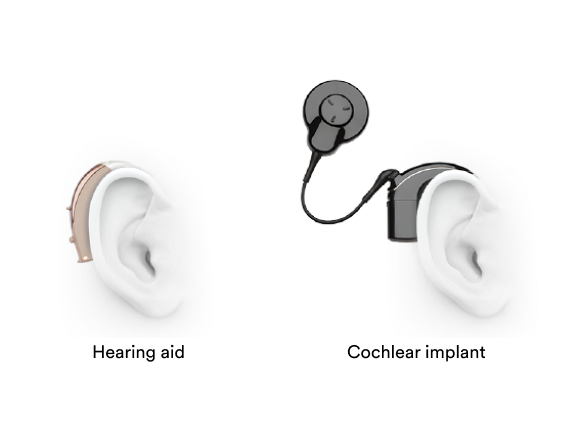
Hearing aids help by amplifying sound but as hearing loss progresses, some people may need help beyond hearing aids. Cochlear implants focus on enhancing clarity of sound,1-6 while hearing aids mostly work by making sounds louder.1 This clarity could help people reclaim their confidence and fully immerse themselves in the meaningful moments of everyday life. Take this short hearing quiz to learn if you may qualify from a cochlear implant.
What’s the difference between hearing aids and cochlear implants?
Hearing aids help by amplifying sound but as hearing loss progresses, some people may need help beyond hearing aids. Cochlear implants focus on enhancing clarity of sound,1-6 while hearing aids mostly work by making sounds louder.1 This clarity could help people reclaim their confidence and fully immerse themselves in the meaningful moments of everyday life. Take this short hearing quiz to learn if you may qualify from a cochlear implant.
-Will
-Nancy
-Cathy
-Jay
 In a study, at 12 months, 97% of adults with a cochlear implant experienced significant improvement in speech understanding compared to when using a hearing aid.4
Affording a cochlear implant is a concern for many. Unlike hearing aids, hearing implants are typically covered by Medicare.† They are also covered by most insurance plans and typically Medicaid.* Contact your insurance company or local Hearing Implant Specialist to determine your eligibility for coverage and to see how much a cochlear implant will cost you.
Ready to get started? Get a free guide and learn more about Cochlear
If you are ready to experience the difference that clarity makes and get more information about cochlear implants, download this free guide. (We can also mail it to you!)
Explore differences between hearing aids and cochlear implants
Learn the signs your hearing aid is not enough
Discover benefits of cochlear implants and how they work
Get information on cost and insurance and next steps

Discover more about cochlear implants
Learn how Cochlear hearing solutions work and discover how they could help your loved one.
Learn more
Find a clinic near you or your loved one
The next step is to find a hearing health professional in your area. They can talk to you and your loved one, test your hearing and help you find a solution for your needs.
Disclaimer
Please seek advice from your health professional about treatments for hearing loss. Outcomes may vary, and your health professional will advise you about the factors which could affect your outcome. Always read the instructions for use. Not all products are available in all countries. Please contact your local Cochlear representative for product information.
Views expressed are those of the individual. Consult your health professional to determine if you are a candidate for Cochlear technology.
For a full list of Cochlear’s trademarks, please visit our Terms of Use page.
†Covered for Medicare beneficiaries who meet CMS criteria for coverage.
*Contact your insurance company or local Hearing Implant Specialist to determine your eligibility for coverage.
References
- Fitzpatrick EM, Leblanc S. Exploring the factors influencing discontinued hearing aid use in patients with unilateral cochlear implants. Trends in Amplification. 2010, 14; (4): 199–210.
- Rumeau C, Frere J, Montaut-Verient B, Lion A, Gauchard G, Parietti-Winkler C. Quality of life and audiologic performance through the ability to phone of cochlear implant users. Eur Arch Otorhinolaryngol. 2015, 272: 3685–3692.
- Runge CL, Henion K, Tarima S, Beiter A, Zwolan TA. Clinical outcomes of the Cochlear™ Nucleus® 5 cochlear implant system and SmartSound™ 2 signal processing. J Am Acad Audiol. 2016, 27; (6): 425– 440.
- Kelsall D, Lupo J, Biever A. Longitudinal outcomes of cochlear implantation and bimodal hearing in a large group of adults: A multicenterclinical study. Am. J. Otolaryngol. 2021, 42 (1): 102773.
- Buchman CA, Herzog JA, McJunkin JL, Wick CC, Durkovic N, Firszt JB, Kallogjeri D. Assessment of Speech Understanding after Cochlear Implantation in Adult Hearing Aid Users. A Nonrandomized Controlled Trial. JAMA Otolaryngology-Head & Neck Surgery. 2020;146(10):916-924. Doi:10.1001/jamaoto.2020.1584.
- Boisvert I, Reis M, Au A, Cowan R, Dowell RC. Cochlear implantation outcomes in adults: A scoping review. PLOS ONE. 2020, 15 (5): e0232421. https://doi.org/10.137/journal.pone.0232421
- Hirschfelder A, Gräbel S, Olze H. The impact of cochlear implantation on quality of life: The role of audiologic performance and variables. w Head Neck Surg. 2008 Mar;138(3): 357-362.
- Balkany T, Hodges A, Menapace C, et al. Nucleus Freedom North American clinical trial. Otolaryngol Head Neck Surg 2007;136(5):757-762.